
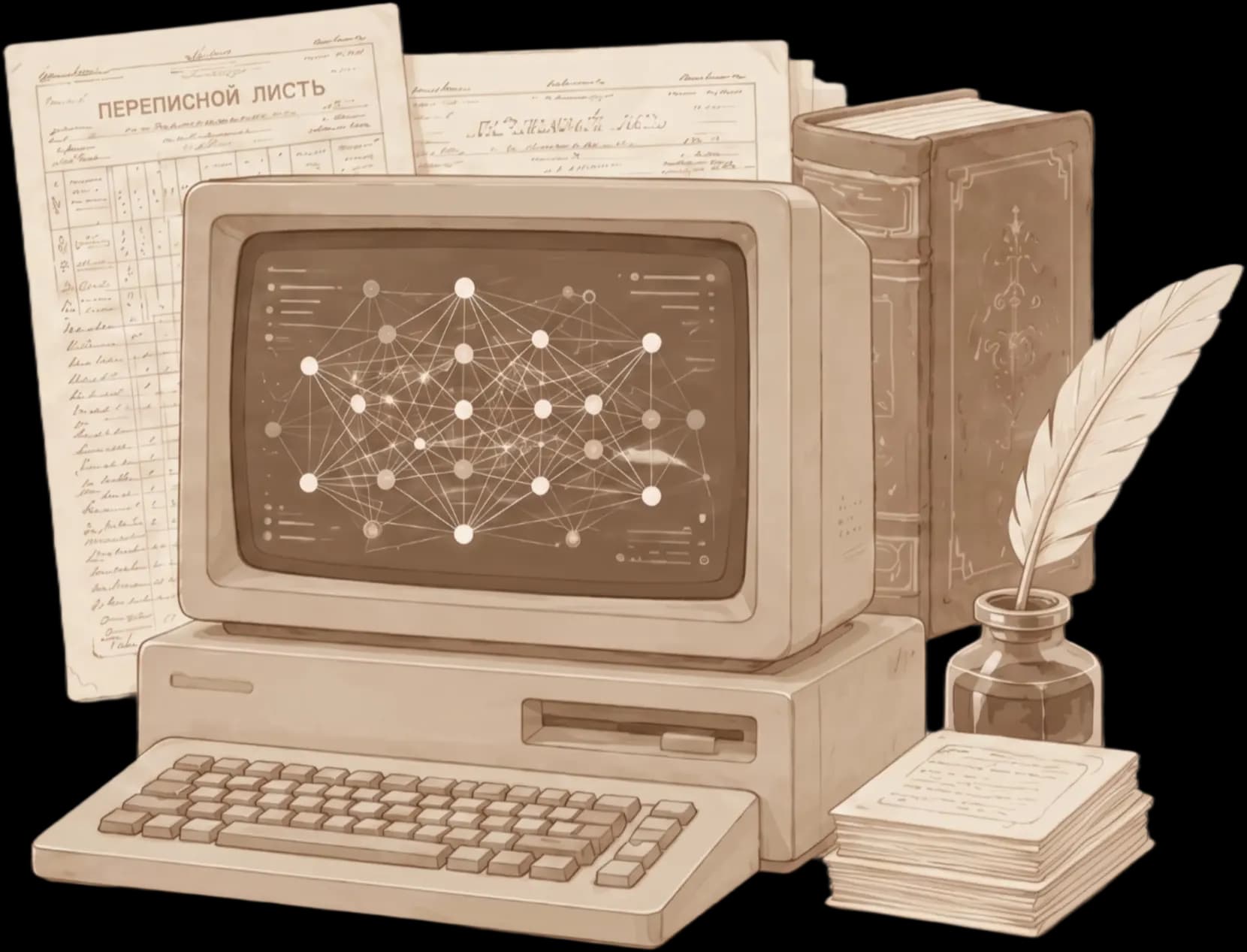
Interest in family history continues to grow. More and more people want to know who their ancestors were, where they lived, how they earned a living and what their lives were like. Tracing your family tree can help you understand both your family's past and your own roots.
Researching ancestors in Latvia once often meant visiting archives in person and working through old documents. Today, getting started is much easier: many historical records have been digitized and are available online. Parish registers, census records and other archival sources can help you trace your family back several generations.
This guide explains where to begin, where to find Latvian archival records and which online resources can help you build your family tree.
Where should you start?
Before searching the archives, gather everything you already know about your family. Write down the names of your parents and grandparents, along with the dates and places of their births, marriages and deaths.
Talk to older relatives. They may remember details that never made it into surviving documents: earlier surnames, former homes, distant relatives or stories of family moves. Look through old photographs, passports, birth and marriage certificates, letters and other family papers as well.
For research in Latvia, identifying your family's place of residence and religious denomination is especially important. Many historical records, particularly parish registers, were organized by religious community. Knowing where your ancestors lived and which faith they belonged to will help you work out where to look.
Start with the most recent generations you can identify and work backwards. Avoid jumping straight to a distant ancestor just because they share your surname: people with the same surname are not necessarily related. Wherever possible, use archival records to support each link between generations.
Where can you search for Latvian ancestors online?
Many Latvian historical records are now available online, so you can begin researching from home. Some resources provide digitized images of original documents; others offer searchable databases that let you find people by first name and surname.
The National Archives of Latvia and Raduraksti
The National Archives of Latvia, particularly the Latvian State Historical Archives (LVVA), is a major repository of historical records. A substantial part of its holdings has been digitized and is available through the free Raduraksti website.
Here you can browse parish registers, census records, revision lists and other documents. Most material, however, consists of scans of handwritten pages. Finding a particular person may mean working through dozens or even hundreds of pages, usually with at least an approximate place and date in mind.
Rootera — find ancestors by surname
Searching is easier in databases where handwritten archival records have already been transcribed and can be searched by first name and surname.
Rootera is one such resource. It lets you search for ancestors by name in surviving records from the 1897 census covering the territory of present-day Latvia. This helps you find entries without having to browse every page yourself.
For a walkthrough of the search tools, read our guide How to Use Rootera.
Ciltskoki
Another useful resource for researching ancestors in Latvia is Ciltskoki. The project manually indexes historical documents, making it possible to look up people by first name and surname.
The website also has a wealth of material that has not been indexed but may contain valuable information about your ancestors. Its forum is a place to ask questions and get advice that can help you move your research forward.
FamilySearch
The international genealogy website FamilySearch holds a large collection of digitized records, including documents from Latvian archives. It is particularly useful for finding additional record collections, although access to some images may be restricted.
Tip: Use several resources together. Indexed databases can help you find someone more quickly, while original archival documents let you verify the details and take your research further.
Which records can help you trace ancestors in Latvia?
A wide range of historical documents survives for family history research in Latvia. Parish registers, census records and revision lists are among the most useful. Each source offers different information and can help you trace your family back through earlier generations.
Parish registers
Parish registers are a key source for family historians. They record births and baptisms, marriages and deaths. Entries may include parents' names, the mother's maiden surname, the family's place of residence and other details that help establish relationships.
These registers were kept by religious communities, including Lutheran, Catholic, Orthodox, Old Believer and Jewish congregations. Knowing your ancestors' denomination and the parish or congregation they belonged to is therefore an important part of the search.
The 1897 census
The first general census of the Russian Empire, taken in 1897, is a particularly valuable source for tracing ancestors in Latvia. Census sheets record names, ages, birthplaces, religion, occupations and relationships between people living in the same household.
Unfortunately, only part of the 1897 census survives. The most complete surviving material covers Latgale, a region in eastern Latvia that includes Dvinsk (present-day Daugavpils) and Rezhitsa (present-day Rēzekne), as well as many other towns and villages. Available census sheets can be browsed on Raduraksti.
Rootera lets you search transcribed 1897 census entries by first name and surname, then open the original archival documents to check what you have found.
The 1935 and 1941 censuses
The 1935 and 1941 censuses are valuable sources for researching families in the 20th century. Digitized copies were previously available on FamilySearch, but access was later closed.
In October 2026, Latvia's parliament, the Saeima, adopted amendments to the Archives Law (Arhīvu likums), reducing the access restriction period for census records to 60 years. This provides a legal basis for reopening access to the 1935 and 1941 censuses, although it is not yet known when they will become available online again.
Revision lists
Revision lists were records of the tax-paying population compiled in the Russian Empire during the 18th and 19th centuries. They contain information about family members, their ages and relationships. These records are especially useful for tracing earlier generations when parish registers alone are not enough.
Estate inventories and lustrations
Estate inventories and lustrations were compiled to record land, farms, property and the obligations of local inhabitants. Some include peasants' names and surnames, along with details of their households, homes and landholdings.
These documents are particularly useful for researching ancestors in Latgale from the 17th to the 19th century, as they can provide information about people who lived before many other records begin.
Military records
If your ancestors served in the First or Second World War, specialized military archives may hold information about them.
For First World War research, In Memory of the Heroes of the Great War contains records of personnel who served in the Russian Imperial Army.
For ancestors who served in the Red Army during the Second World War, Pamyat Naroda provides information about military service, awards, wounds, deaths and missing personnel.
Military records may also include a date and place of birth, the names of parents or other relatives, and places of conscription and burial. These details can help establish family relationships and point you towards further archival records.
Other historical sources
House registers, passport records, military lists and old newspapers can also provide useful information.
Bear in mind that not all historical documents have survived. Some were lost during wars and other historical events. Records relating to present-day Latvia may also be held abroad, including in the National Historical Archives of Belarus.
How do you search for ancestors by surname?
A surname search is one of the easiest ways to begin researching your family. However, historical records in Latvia were written in several languages, including Latvian, Russian, German and Polish. The same surname may therefore appear in different forms.
Start by searching a known surname in indexed databases such as Rootera or Ciltskoki. If you find no results, try alternative spellings. Remember that surnames may also have changed over time.
When you find a promising entry, do not assume the person is your relative. Compare their first name, age, place of residence and other family members. A matching surname alone does not establish a family connection.
Where possible, check the information against the original archival document. Once you have identified the parents, you can look for the previous generation in parish registers, census records and other sources.
If surname searches lead nowhere, try locating records for the village, town or parish where your ancestors lived. Many archival collections have not yet been indexed, so you may need to browse the documents yourself.
How can you keep your research organized?
As your research progresses, names, dates and documents quickly accumulate. Keeping your findings organized from the start will help you avoid confusion and repeating work you have already done.
Begin with a family tree showing known relatives, their birth, marriage and death dates, and their relationships. Add to it gradually as you find more documents.
Recording your sources is just as important. Save links to archival documents, along with copies or photographs where possible. This will let you return to the original source, check details and avoid errors in your tree.
A research log is useful too. Note which documents you have checked, where you searched and what you found. Record unsuccessful searches as well as discoveries.
Genealogy software can help you manage this information by keeping your family tree, documents and research notes together.
Frequently asked questions about finding ancestors in Latvia
Can you research Latvian ancestors for free?
Yes. Many historical documents are available free of charge on Raduraksti and FamilySearch. Indexed databases can also help you search for ancestors by first name and surname. However, access to some material or additional search features may be paid or restricted.
Can you find ancestors without knowing where they were born?
Yes, although the search may be more difficult. Start with what you know about your relatives, try surname searches in indexed databases and look at records for other family members. These may help you identify a place where you can continue your research.
How far back can you trace a family in Latvia?
That depends on the region, your family's religious denomination and which records have survived. In many cases, families can be traced back to the 18th century, and sometimes further.
Taking the next step
Digitized archives and genealogy databases have made researching ancestors in Latvia much more accessible. Even a handful of names from your family's past may be enough to get started.
Work backwards one generation at a time, check the evidence and keep a record of your findings. Each new entry could help you uncover another generation of your family.